A major clean energy shift is on the horizon. From 1 July 2025, the Federal Government will begin rolling out the Cheaper Home Batteries Program, offering support for up to one million homes to install solar battery systems. This is one of the most significant steps Australia has taken in making renewable energy more accessible — and the time to prepare is now.
The Cheaper Home Batteries Program: What You Need to Know
The Australian Government is investing $2.3 billion into the Cheaper Home Batteries Program, launching on 1 July 2025, to help households and small businesses take control of their energy future. This landmark initiative offers a significant discount on the cost of installing eligible battery storage systems—empowering more Australians to store cheap, clean solar power and reduce energy costs long term.
What’s the Program About?
The Cheaper Home Batteries Program is designed to:
-
Make battery storage more affordable by offering a discount of around 30% on the upfront cost of eligible systems.
-
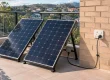
Help homes and businesses store solar power generated during the day for use at night or during peak times.
-
Ease pressure on the electricity grid, reducing reliance on expensive gas power, poles, and wires—bringing down costs for all consumers.
The discount will be delivered via approved retailers and installers and administered through the Small-scale Renewable Energy Scheme (SRES) by the Clean Energy Regulator.
Who Can Apply?
The program is available to Australian households and small businesses installing small-scale battery systems either on or off the grid.
To be eligible:
-
Battery size must be between 5 kWh and 100 kWh in nominal capacity.
-
The rebate applies to up to 50 kWh of usable battery capacity.
-
Systems must be installed with a new or existing solar PV system.
-
Installations must be carried out by accredited battery installers through Solar Accreditation Australia (SAA).
-
Both the battery and inverter must be Clean Energy Council (CEC) approved.
How the Discount Works
The rebate is calculated using Small-scale Technology Certificates (STCs), which are awarded based on the battery’s usable capacity. For example, in 2025:
-
9.3 STCs per kWh of usable capacity
-
Equivalent to around $372 per kWh
-
Capped at 50 kWh, equalling a potential maximum discount of $18,600
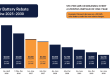
This STC value will reduce each year until the program ends in 2030, as shown below:
| Year | Estimated Value per kWh | STC Factor |
|---|---|---|
| 2025 | $372 | 9.3 |
| 2026 | $336 | 8.4 |
| 2027 | $296 | 7.4 |
| 2028 | $260 | 6.5 |
| 2029 | $224 | 5.6 |
| 2030 | $188 | 4.7 |
This gradual reduction incentivises early adoption.
Additional Details and Requirements
-
Only one battery system per premises is eligible for support.
-
Electric vehicles are excluded from the program.
-
Batteries must be capable of Virtual Power Plant (VPP) participation if on-grid (but actual participation is not required).
-
Installations must adhere to the Best Practice Guide: Battery Storage Equipment.
-
Full compliance with state and territory electrical safety laws is mandatory.
-
System owners will receive detailed written statements from both the retailer and installer, outlining the system specs, safety compliance, and potential energy savings.
What About Existing Systems?
You may be eligible to upgrade an existing battery system if:
-
It has not previously received a rebate under this program.
-
The upgrade adds at least 5 kWh, with a new total capacity under 100 kWh.
However, adding capacity later to a battery system that already received the discount is not eligible.